
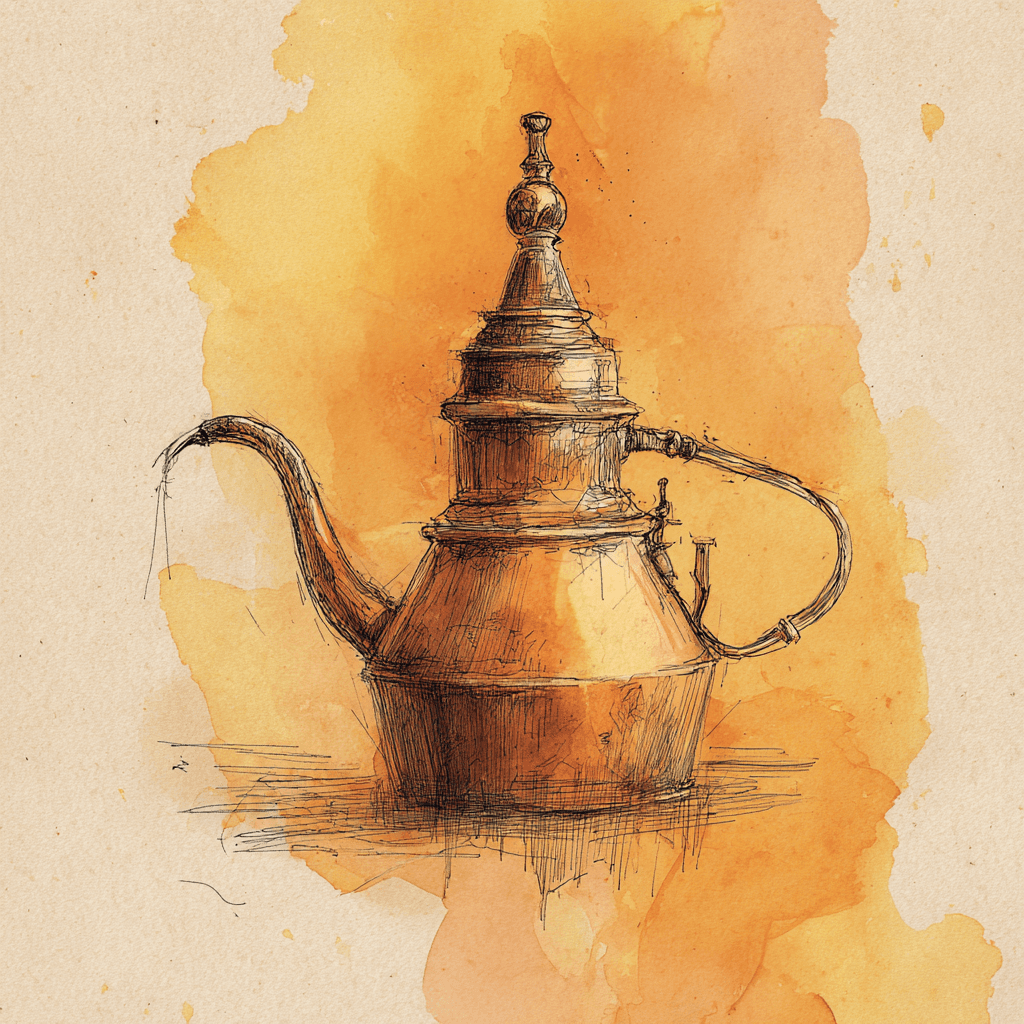


In India there is a town that does more than make perfume - it captures the very scent of first rain. Kannauj in Uttar Pradesh has been called the perfume capital of India for over four centuries. Here artisans still craft attars by hand using age-old methods, without modern machinery, in small copper pots over wood and cow-dung fires.
One of Kannauj’s most remarkable perfumes is Mitti Attar. “Mitti” means earth, and “attar” means perfume. Potters bake clay from riverbeds into small disks. These clay disks are soaked, then heated over wood fires. As the water turns to steam, it carries the earthy scent into a flask of sandalwood oil which absorbs and preserves that smell of wet soil. The result is petrichor in a bottle.
What makes the craft even more amazing is how alive it still is. The process used for Mitti Attar is called deg-bhapka. The distillation uses copper stills called degh and receivers called bhapka. Everything is sealed with a clay mixture so fragrances do not escape. Steam passes through bamboo or copper piping into sandalwood oil and the final perfume gathers slowly, patiently. Some attar makers age perfume in camel-skin bottles to let tiny transformations happen with time.
Kannauj’s attar tradition does more than produce rare scents. It carries culture, history, memory. Rose, jasmine, vetiver, shamama blends - each fragrance is a layer of what people here have been smelling and valuing for generations. During the Mughal era this art was celebrated; empires used attars in daily life for perfume, in baths, to scent rooms.
But the story isn’t being written without struggle. The craft is slowly fading under pressure. Synthetic perfumes, cheaper alcohol-based fragrances, inconsistent sandalwood supplies, and high taxes make it hard for small perfumeries to compete. Many older distilleries have closed. Some families hesitate to pass on the delicate secrets of scent-making to the next generation.
Yet there is hope. A renewed interest in natural, sustainable, artisanal products has begun to shift customer demand. Young perfumers and international buyers are rediscovering Kannauj’s attars. The traditional methods are being showcased in heritage tours, fragrance schools, and boutique stores. The world is waking up to the value in a perfume that has soul, that smells like earth after rain.
So the next time you reach for a perfume, remember Kannauj. In its quiet lanes behind copper cauldrons and clay seals lives the scent of rain, of soil, and of generations.